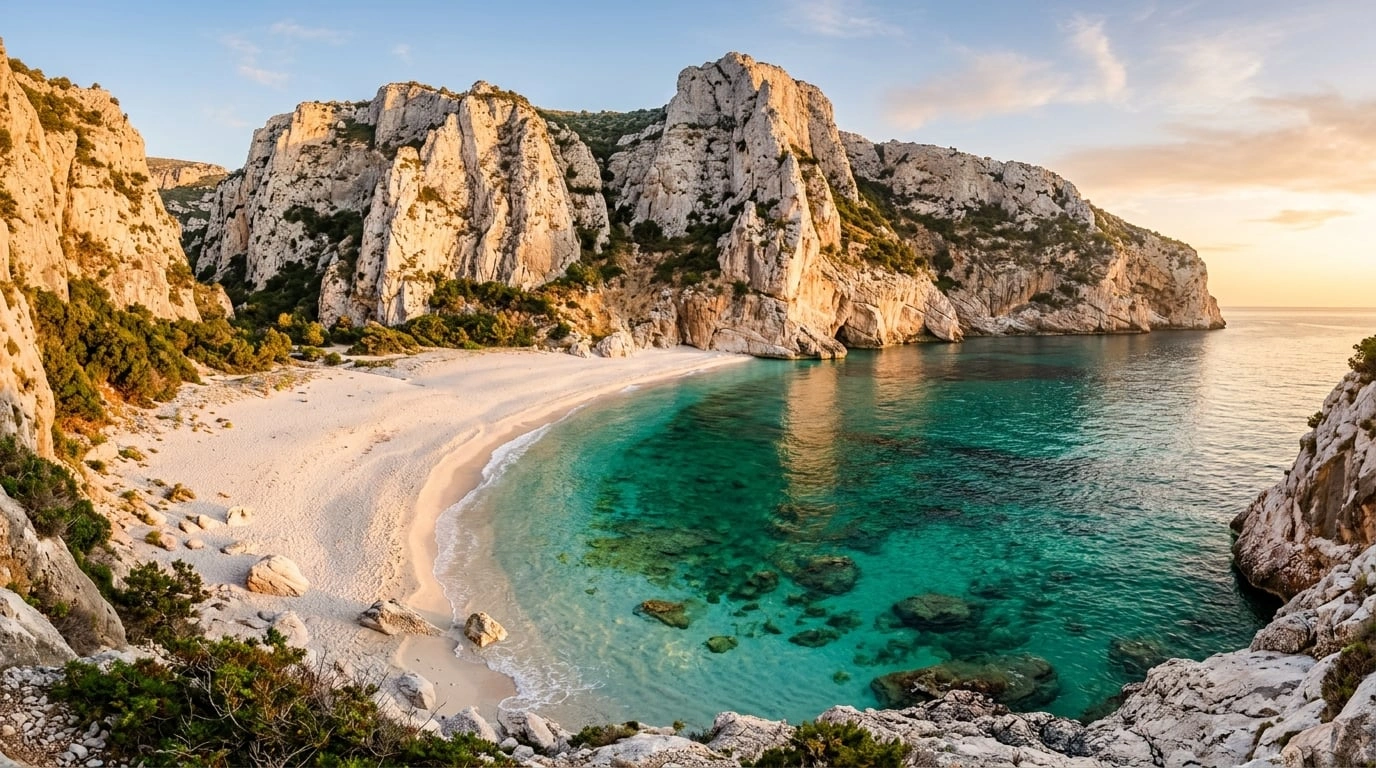
Mediterranean architecture is more than a style – it is a philosophy of living. In Sardinia, where the climate, the light and the landscape have shaped building for centuries, it becomes particularly clear how timeless design emerges: from respect for nature.
Materials from the landscape
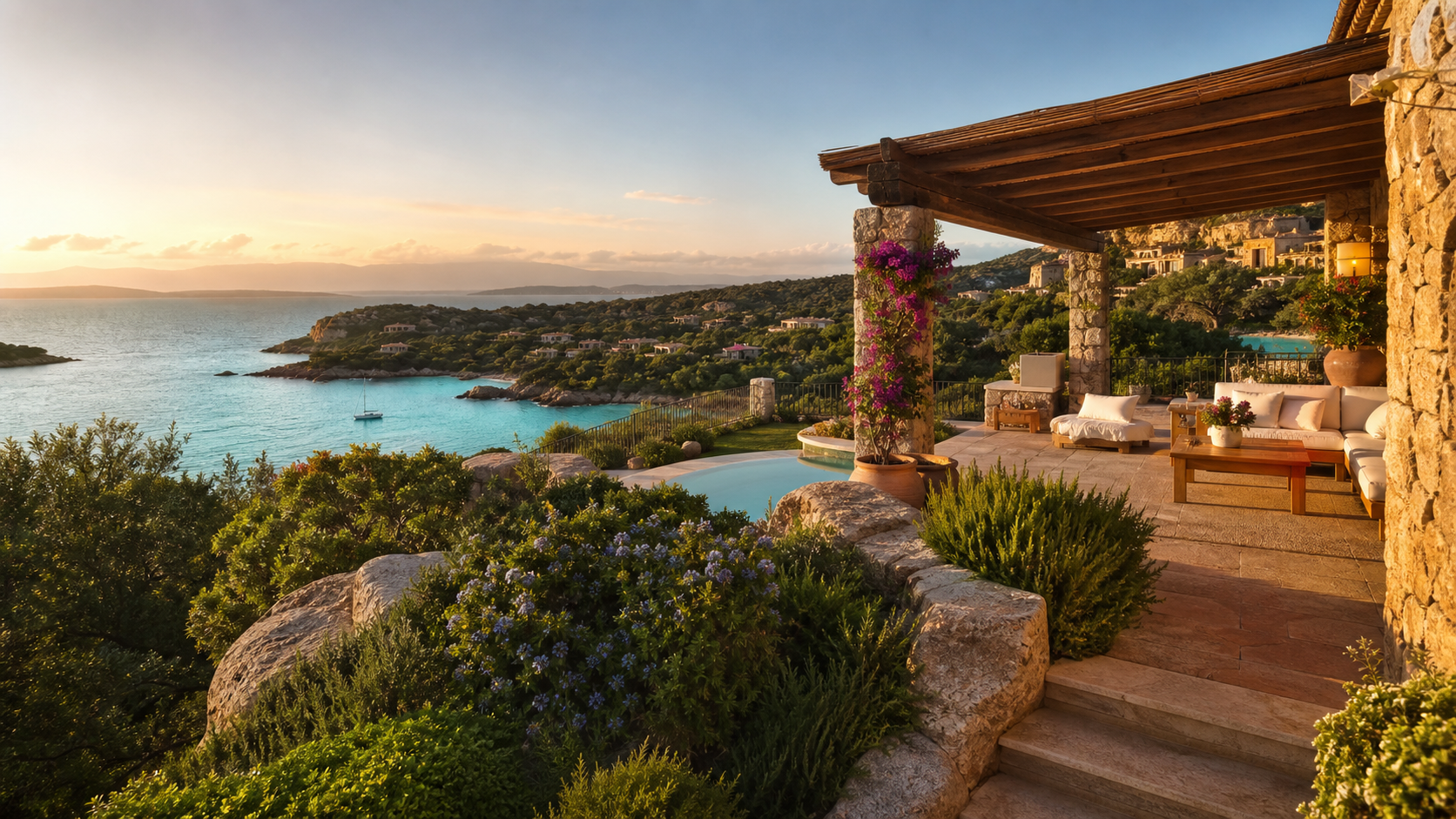
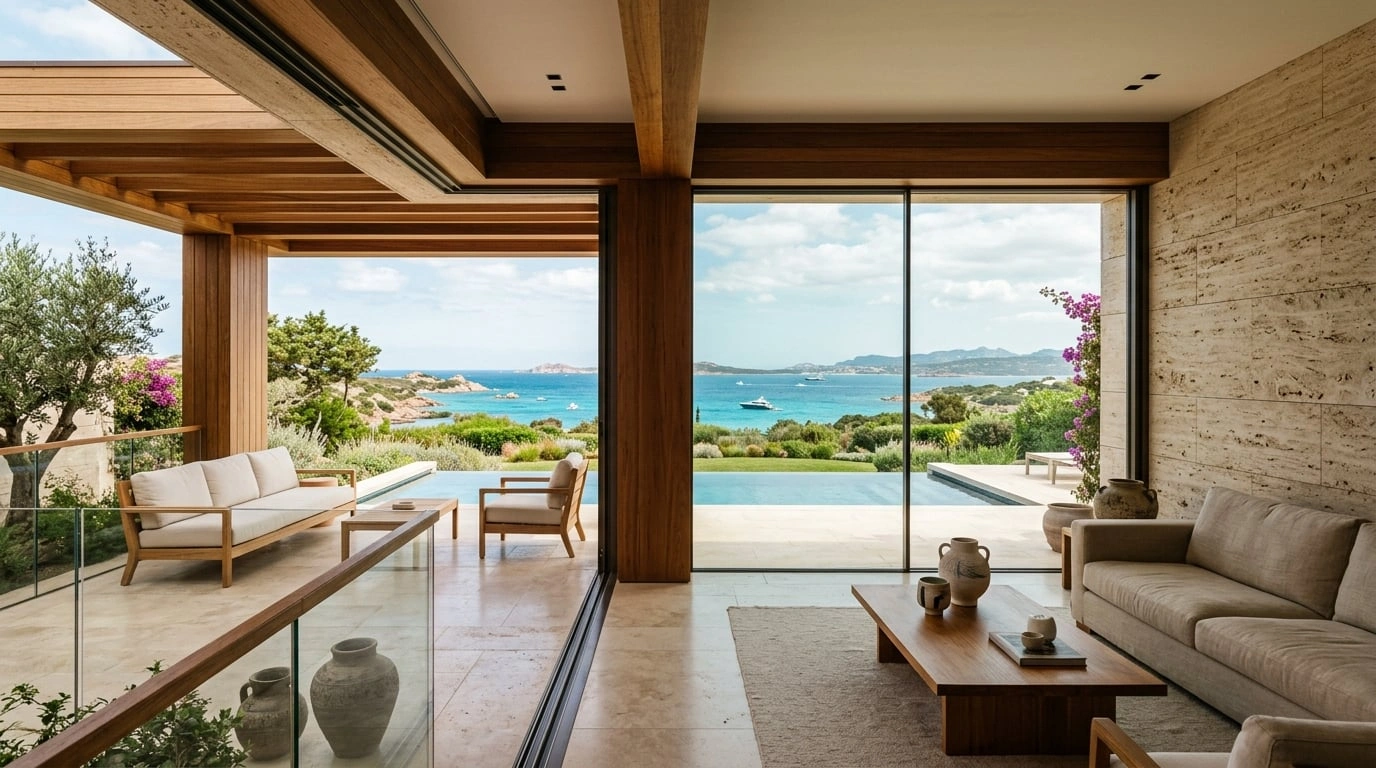
Natural stone, travertine, lime and local wood are the cornerstones of Sardinian architecture. These materials age gracefully, naturally regulate the indoor climate and connect the building to its surroundings. A villa built from the stone of its surroundings never feels like a foreign body – it grows out of the landscape.
Light as a building material
Hardly anywhere is the light as intense as in the Mediterranean. Mediterranean architecture deliberately works with this light: deep window reveals, shading loggias, carefully placed openings that capture the warm morning light and protect against the harsh midday sun.
Good architecture in the Mediterranean does not build against the climate, but with it.
Indoor-outdoor living
Perhaps the most defining feature: the flowing connection between interior and exterior. Large sliding elements, covered terraces and pools that visually merge into the horizon dissolve the boundary between house and nature. Life takes place outdoors – protected yet open.
Sustainability as a matter of course
What is considered modern sustainable building today has long been embedded in the Mediterranean tradition: natural cooling through mass and shading, local materials with short transport routes, a construction designed for longevity. Modern technology – photovoltaics, heat pumps, intelligent shading – complements this principle without replacing it.
The philosophy of Real Estate Signature
Our projects combine the timeless language of Mediterranean architecture with German precision in planning and execution. The result is villas that are not only beautiful, but also retain their value and elegance for decades.
Conclusion
Modern building can learn a great deal from Sardinia: that true elegance arises from reduction, that materials tell a story, and that the most beautiful architecture is that which subordinates itself to the landscape rather than dominating it.